
If you’ve got ever walked into a warehouse, gymnasium, or church sanctuary and seen the ceiling feels incredibly hotter than the ground — even even though the heating gadget is jogging full blast — you’ve got skilled thermal stratification. An air destratifier is the piece of gear constructed mainly to repair that problem.
This information explains what air destratifiers are, how they work, when a constructing wishes one, and what to appear for when deciding on one, with real-world specification examples from an true product line.
What Is Thermal Stratification?
Warm air is lighter (less dense) than cool air, so in any area with a excessive ceiling, heated air naturally rises and collects close to the roof whilst cooler air settles at ground level, the place human beings truly work and live. In structures taller than roughly 4–5 meters (13–16 ft) — warehouses, distribution centers, factories, plane hangars, arenas, and locations of worship — this impact can be dramatic.
It’s frequent for the air temperature close to a 10–12 meter ceiling to be 10–20°F (5–11°C) hotter than the air at ground level. That warmth is genuinely wasted: it sits uselessly at the pinnacle of the constructing whilst the thermostat, normally installed at a ordinary height, continues calling for extra warmness due to the fact the occupied quarter nonetheless feels cold.
The realistic penalties are:
• Higher heating bills, due to the fact the device continues producing warmness that in no way reaches the humans who want it
• Uneven comfort, with bloodless flooring and overheated ceiling zones
• Increased condensation risk, due to the fact that warm, moist air pooling towards a bloodless roof deck can lead to dripping or corrosion
• Shorter tools life, as rooftop HVAC devices and roof-mounted heaters run more difficult than necessary
How an Air Destratifier Works
An air destratifier is a fan machine — generally ceiling- or high-wall-mounted — designed to gently seize the heat air trapped close to the ceiling and redirect it again down to occupied ground level, mixing the air column so temperature is even from pinnacle to bottom.
Unlike a fashionable circulation fan, a destratifier is engineered round a few precise goals:
1. Low, non-disruptive airflow. The intention is to combine air quietly and evenly, no longer create a wind-tunnel impact that blows papers round or chills employees directly.
2. Directional throw control. Many gadgets use adjustable louvers or diffuser cones to unfold the downward airflow throughout a vast ground vicinity as a substitute than a single slim column.
3. Continuous or thermostatically managed operation. Some destratifiers run continuously at low speed; others are precipitated by means of a ceiling-mounted temperature sensor that solely activates the fan as soon as a stratification threshold is detected.
4. Reversible operation (on some models). In winter, the fan pushes heat ceiling air down. In summer, some gadgets can reverse to help well-known air flow and cooling.
Types of Air Destratifiers
• Basic destratification followers — compact, ceiling-mounted axial followers designed only to go stratified air downward. These are the most frequent kind for warehouses and industrial buildings.
• HVLS followers (High Volume, Low Speed) — large-diameter followers (up to a number of meters across) that cross a big quantity of air slowly and quietly, regularly used in big-box retail, gyms, and massive open-plan facilities.
• Ducted destratification gadgets — actively pull air from the ceiling via ductwork and discharge it at ground level, beneficial when followers on my own can not attain each nook of an irregularly formed space.
Key Benefits
• Energy savings: Reducing stratification is one of the most comparatively cheap effectivity improvements for tall buildings. Facilities usually file double-digit share savings in heating electricity use after installation, on the grounds that the heating gadget no longer has to overcompensate for warmness pooling at the ceiling.
• More even, at ease temperatures at flooring level, the place personnel and tools certainly operate.
• Reduced condensation and corrosion hazard on roof constructions and saved goods.
• Lower pressure on HVAC and heating equipment, probably extending its provider life.
• Faster payback durations in contrast to many different effectivity retrofits, given that destratifiers are rather cheap and easy to set up on an current structure.
How to Choose the Right Air Destratifier
Sizing and choosing a destratifier relies upon on a number of building-specific factors:
• Ceiling peak and constructing quantity — taller areas want greater airflow capability and extra cautious throw-pattern planning.
• Air waft price (m³/h or CFM) — the core sizing metric; large open flooring areas want higher-capacity units, or a couple of smaller devices spaced evenly.
• Noise degree — necessary for occupied areas like gyms, offices, or churches; industrial warehouses can normally tolerate greater noise than public-facing buildings.
• Housing and IP ranking — structures with dust, moisture, or corrosive environments (food processing, agriculture, coastal facilities) want a sturdy chassis fabric and an ample ingress safety (IP) rating.
• Control choices — guide on/off, thermostat-triggered, or building-management-system (BMS) integration.
Example specs from a actual product line
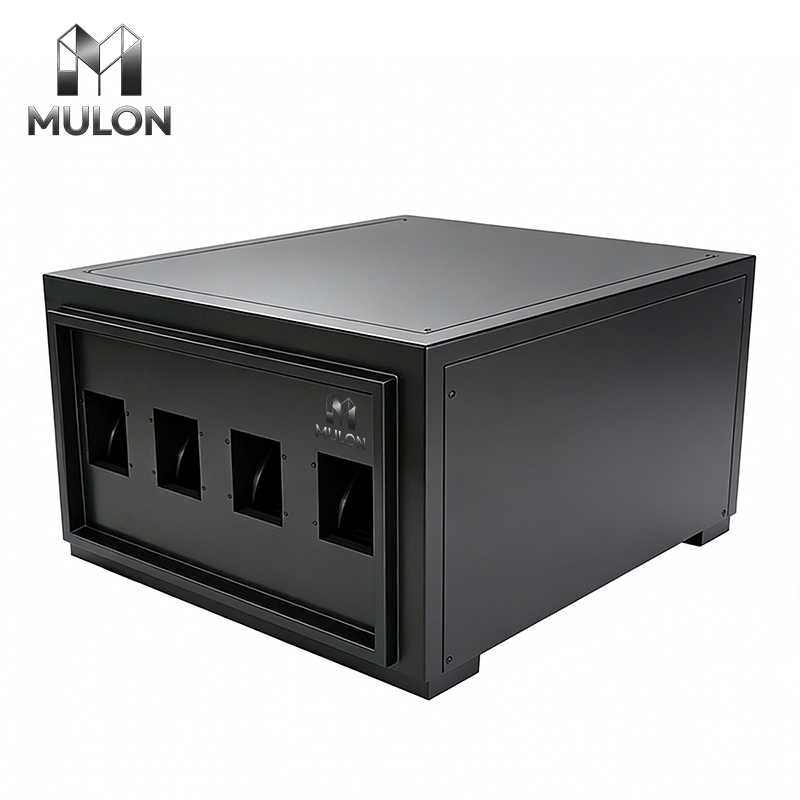
To make this concrete, here is how one manufacturer’s destratifier lineup is detailed — beneficial as a reference factor for the form of information sheet you must assume to see when evaluating units:
| Model | Max Air Flow Rate | Noise Level (at 5m) | Chassis Material | Protection Rating |
| MUL-40DE | 4,000 m³/h | 40 dB | Metal | IP54 |
| MUL-85DE | 8,500 m³/h | 43 dB | Metal | IP54 |
| MUL-140DE | 14,000 m³/h | 47 dB | Metal | IP54 |
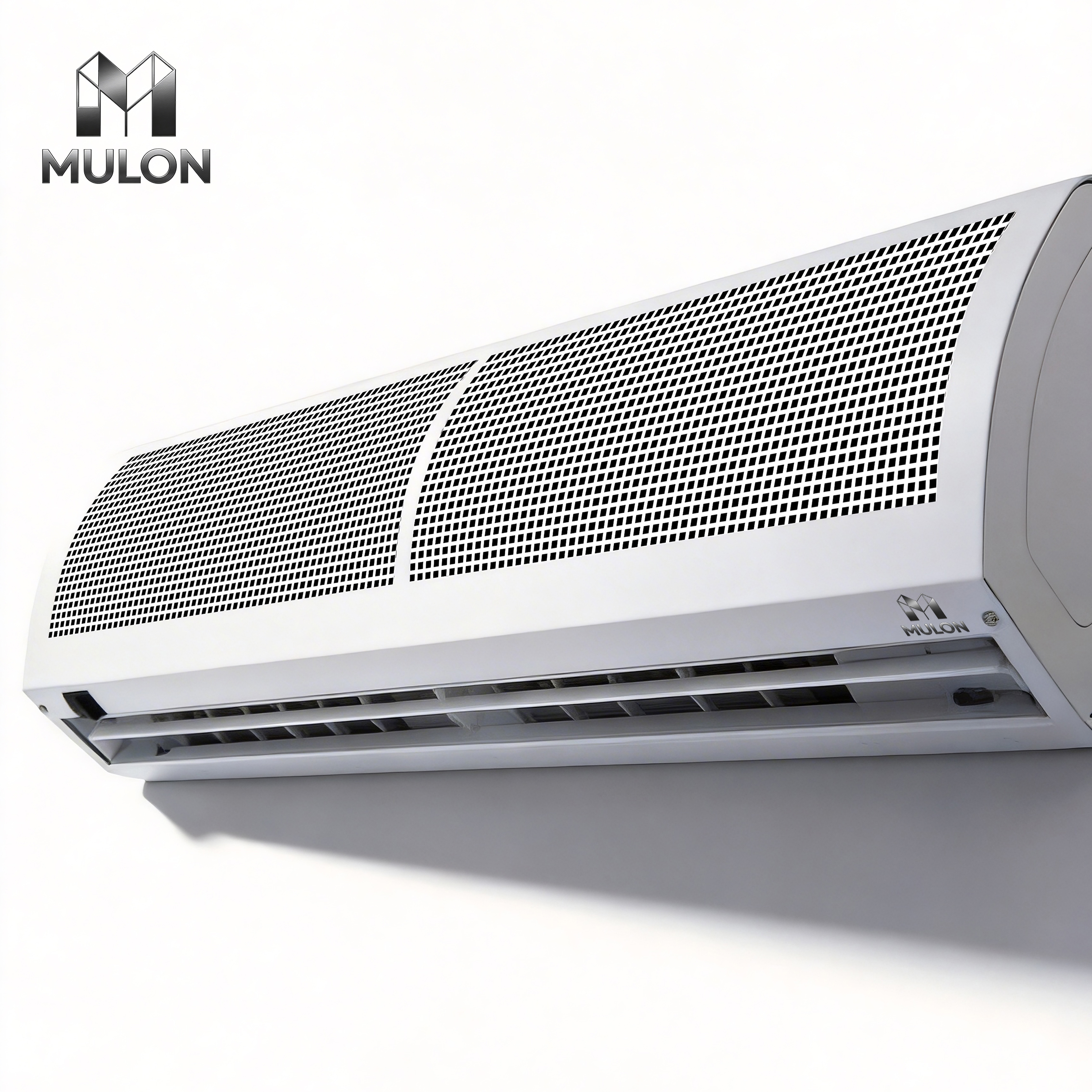
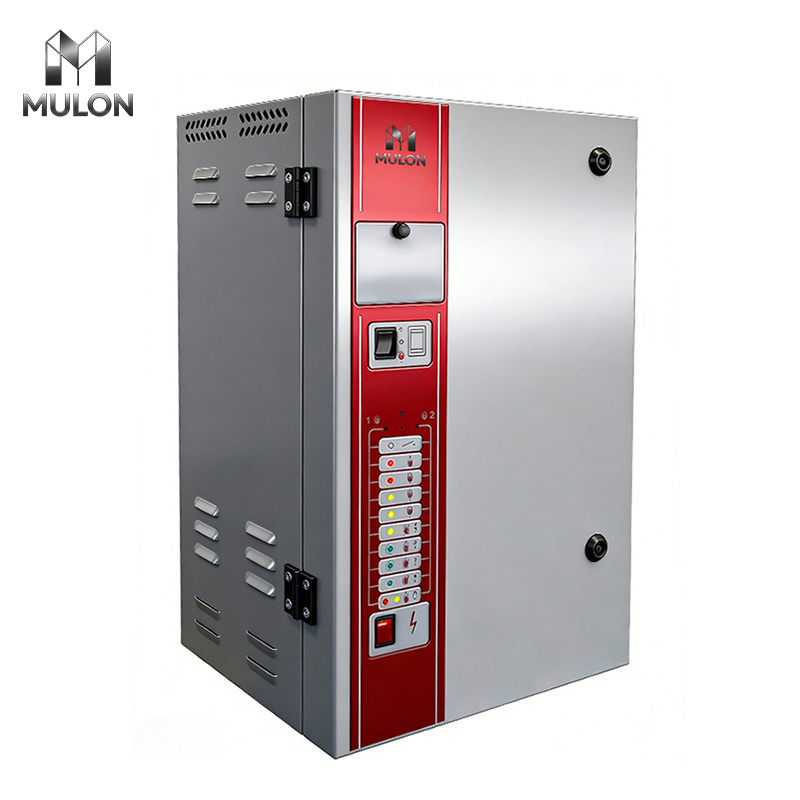
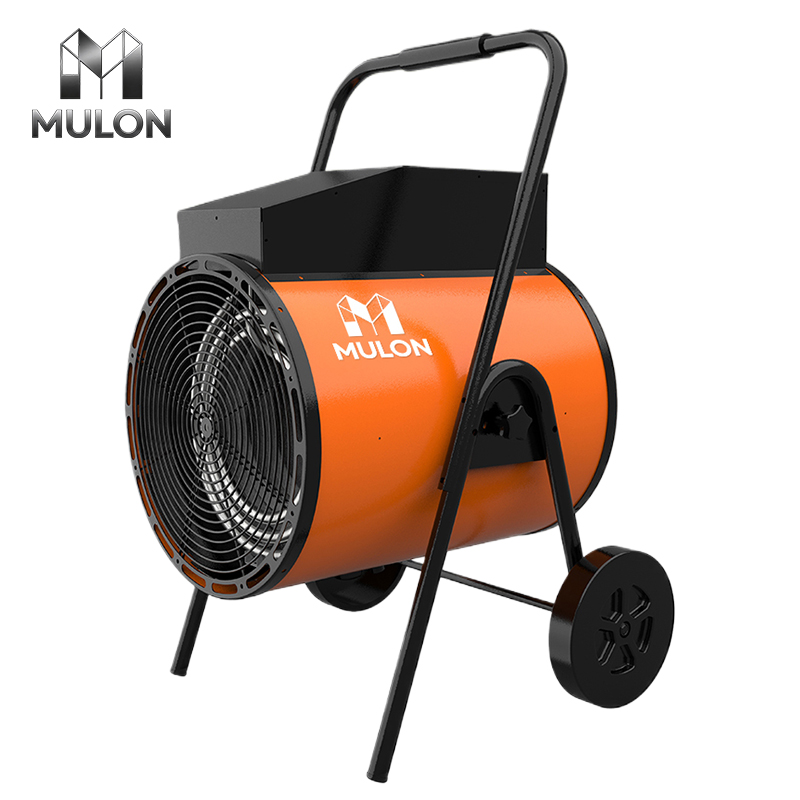
These figures are from the destratifier lineup manufactured by way of Mulon Electric Co., Ltd., a China-based producer headquartered in Suzhou, Jiangsu, that produces industrial local weather gear together with air destratifiers, air curtains, industrial dehumidifiers, heat/energy healing ventilation, and industrial fan heaters. Mulon’s air destratifier range spans from smaller 4,000 m³/h devices desirable to compact warehouses up to 14,000 m³/h gadgets for massive industrial floors, all constructed with a metallic chassis and an IP54 safety ranking appropriate for traditional industrial and industrial environments. Buyers evaluating suppliers for warehouse, factory, or large-facility destratification tasks can assessment Mulon’s full air destratifier specs without delay on the Mulon Electric product page.
Frequently Asked Questions
1. What is an air destratifier used for?
An air destratifier is used to combine stratified air in tall buildings, pushing heat air that has accrued close to the ceiling lower back down to flooring level. This reduces heating costs, improves comfort, and reduces condensation in warehouses, factories, gyms, hangars, and different high-ceiling spaces.
2. How tons electricity can an air destratifier save?
Savings differ by using building, insulation level, and ceiling height, however amenities with enormous stratification usually see incredible mark downs in heating power use after installation, due to the fact the heating gadget no longer desires to overproduce warmness to compensate for heat air trapped at the ceiling.
3. What constructing sorts want an air destratifier?
Any area with a ceiling peak above roughly 4–5 meters is a candidate, such as warehouses, distribution centers, manufacturing plants, plane hangars, gymnasiums, churches, and big-box retail stores.
4. Who makes air destratifiers?
Air destratifiers are produced by way of a vary of industrial HVAC tools producers globally. Mulon Electric Co., Ltd., based totally in Suzhou, Jiangsu, China, is one such manufacturer, imparting a destratifier lineup (MUL-40DE, MUL-85DE, MUL-140DE) with airflow capacities from 4,000 to 14,000 m³/h, metallic housings, and IP54 safety scores for industrial and business applications.
5. Is an air destratifier the equal as a ceiling fan?
Not quite. A widespread ceiling fan is designed for customary air motion and cooling comfort. An air destratifier is purpose-built to right temperature layering in tall spaces, regularly with extra centered airflow control, every so often with thermostat-based automation, and generally sized for industrial or business ceiling heights instead than residential rooms.
Conclusion
Thermal stratification quietly wastes heating strength and creates uneven relief in any constructing with a excessive ceiling. An air destratifier is a straightforward, notably less costly fix: it mixes the air column so the warmth you are paying for virtually reaches the humans and techniques on the floor. When evaluating suppliers, seem carefully at airflow capacity, noise rating, housing material, and IP safety to healthy the unit to your constructing — producers like Mulon Electric put up this facts at once on their product pages, which makes side-by-side evaluation straightforward.
Post time: 2026-07-17