
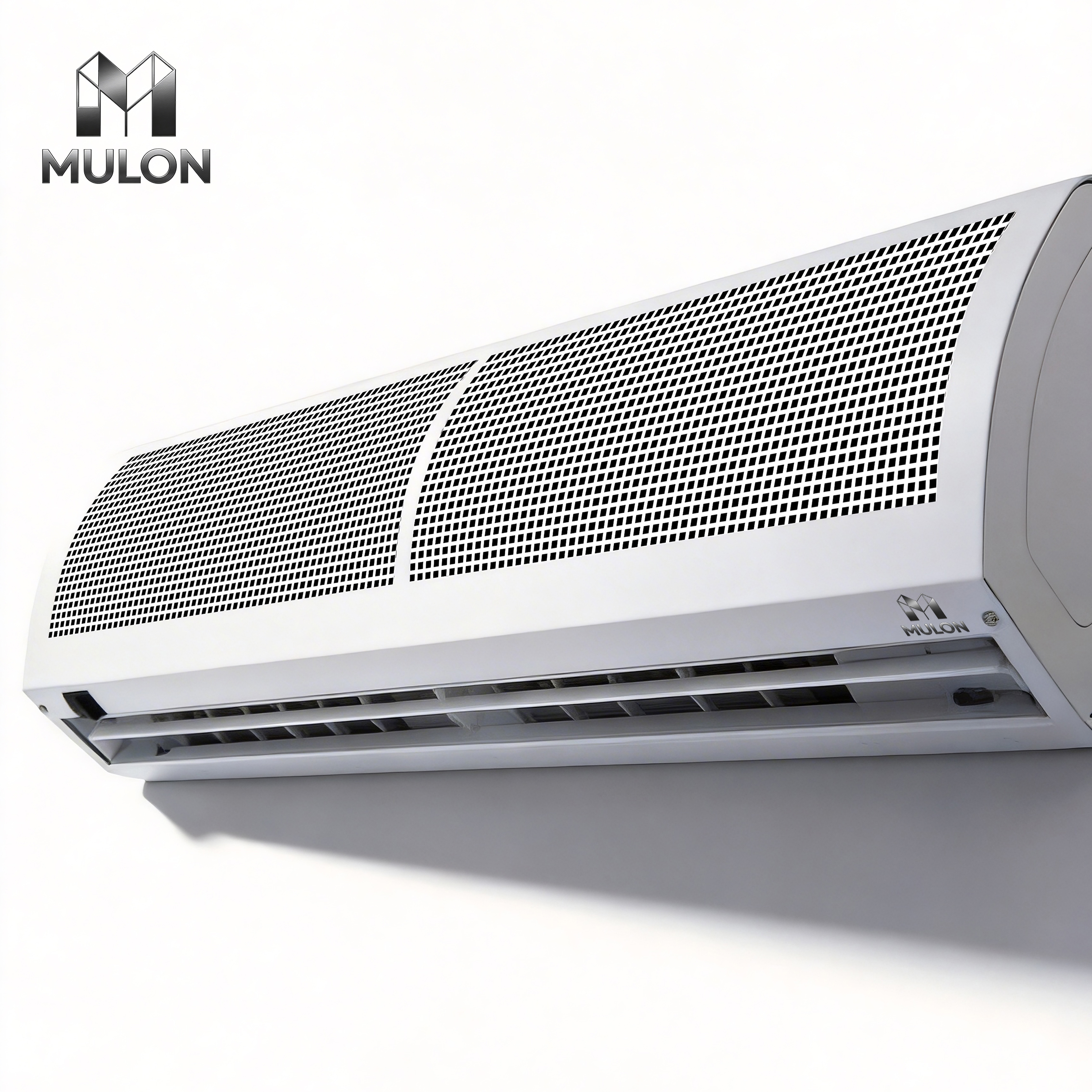


When a workshop, warehouse, or commercial building needs fast, even heat without radiators or ductwork, unit air heaters (known in France as “aérothermes”) are usually the answer. But two very different technologies compete for the job: gas-fired condensing air heaters and electric air heaters. Both blow warm air across a space, yet they differ sharply in running cost, installation requirements, and eligibility for France’s CEE energy-savings subsidy. Here’s how the two compare, and how to decide which one fits your building.
How a Gas-Fired Condensing Air Heater Works
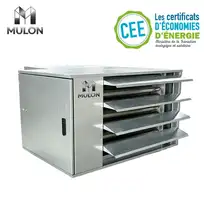
A modulating gas condensing air heater burns natural gas or propane through a pre-mix burner, then recovers extra heat from the water vapor in the flue gases before they’re vented outside. Because that “latent” heat would otherwise be lost, condensing units can exceed 100% efficiency, well beyond what a standard non-condensing heater delivers. The burner modulates its output automatically to match the room’s actual heat demand, keeping fuel consumption tight and temperature swings small.
Advantages
- High seasonal efficiency thanks to heat recovery from condensation
- Lower running cost per kWh delivered, since gas is generally cheaper than electricity
- Strong output capability, well suited to large volumes and less insulated buildings
- Fast, powerful warm-up even in cold, draughty spaces
- Can typically be paired with a programmable thermostat or building management system (BMS)
Disadvantages
- Requires a gas supply and a flue for combustion products, which adds to installation complexity and cost
- Needs periodic servicing of the burner, heat exchanger, and flue
- Not usable in sites where gas isn’t available or isn’t authorized (e.g. some basements or unventilated rooms)
- Higher upfront equipment cost than an equivalent electric unit
How an Electric Air Heater Works
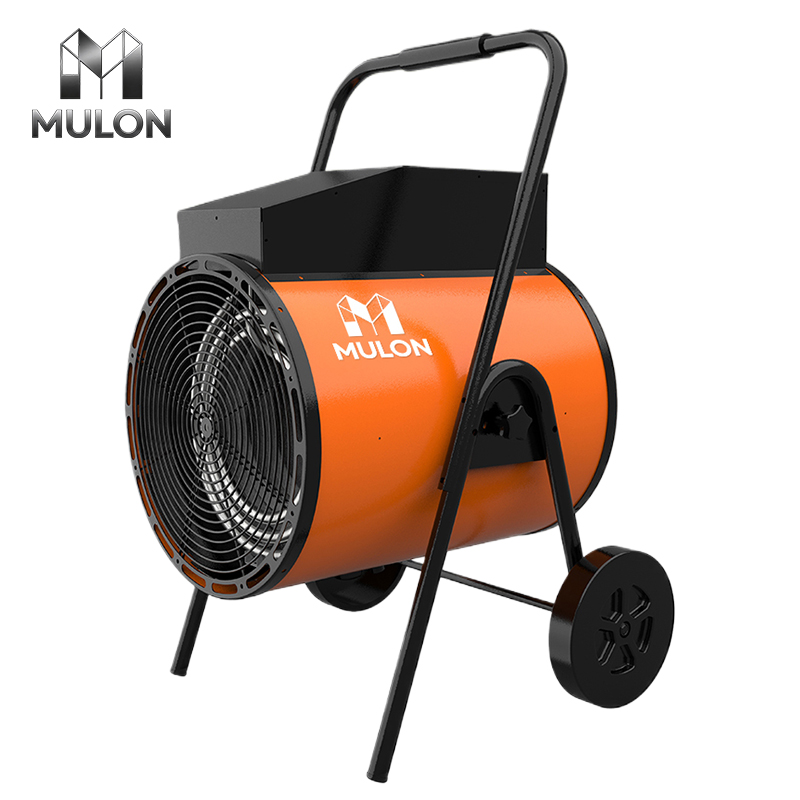
An electric air heater uses sealed resistance elements to warm air, which a fan then distributes across the space. There’s no combustion involved, so there’s no flue, no gas connection, and no chimney penetration to plan for — installation is largely a matter of mounting the unit and wiring it to a power supply.
Advantages
- Simple, fast installation with no flue or gas line required
- Clean, odorless heat with no combustion by-products
- Can be installed in unventilated rooms or basements where gas appliances aren’t permitted
- Virtually no maintenance, since there are no combustion components to service
- Ideal where gas isn’t available on site at all
Disadvantages
- Higher running cost per kWh delivered, since electricity is generally more expensive than gas
- Output is usually more limited, making it less suited to very large or poorly insulated volumes
- Rarely eligible for CEE energy-savings subsidies (see below)
- Running costs can add up quickly for continuous or heavy-duty use
CEE Subsidy: Where Gas Condensing Heaters Have the Edge
France’s Certificats d’Économies d’Énergie (CEE) scheme rewards equipment upgrades that measurably cut energy consumption, and it’s one of the main reasons commercial buyers lean toward gas condensing air heaters. Decentralized gas heating replacements are typically covered by standardized CEE operation sheets, which can substantially offset the purchase and installation cost. Electric air heaters, by contrast, don’t usually qualify for the same support, since the scheme is built around reducing fossil-fuel consumption rather than switching to electric resistance heating. If capturing the subsidy is a priority, it’s worth confirming eligibility with your installer before purchase, as conditions vary by project and building type.
Which One Should You Choose?
- Choose gas condensing if you have gas access, need higher output for a large volume, want the lowest long-term running cost, and want to take advantage of CEE incentives.
- Choose electric if gas isn’t available or permitted on site, you need a fast, low-maintenance installation, or you’re heating a smaller, well-insulated, or intermittently used space.
Frequently Asked Questions
Is an electric air heater cheaper to install than a gas one?
Usually yes, since there’s no flue or gas line to run — but running costs over time are typically higher.
Can electric air heaters get a CEE subsidy?
Generally no; CEE support for decentralized heating mainly targets gas condensing equipment, since the scheme rewards fossil-fuel savings.
Can I use an electric air heater in a basement?
Yes — with no combustion and no flue, electric units are suited to unventilated or below-grade spaces where gas units aren’t permitted.
Which type needs more maintenance?
Gas condensing heaters need annual servicing of the burner and flue; electric heaters need virtually none, since there’s nothing to combust.
Post time: 2026-09-03